
- Home
- Pricing
What our work costs.
Repairs start with a diagnostic at a set rate, listed below. A new system or fireplace starts with a free estimate and one written flat rate number for your project. Below is what goes into that number, line by line, so you can check any quote, ours included.
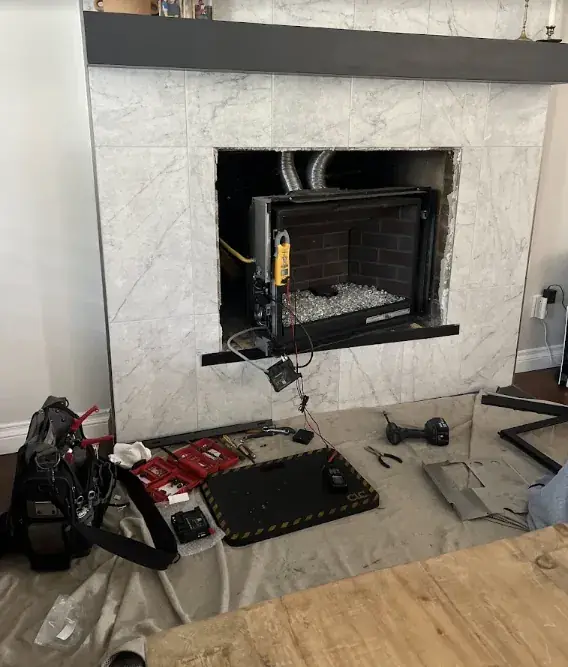
You know the visit price before we come out.
A diagnostic finds the cause first. Installations are priced per project, because no two houses are the same.
Checked October 2026
- Residential HVAC diagnosticA technician finds the cause before anything is replaced.
- $220
- Commercial HVAC diagnosticThe same visit, for a commercial building.
- $250
- Fireplace diagnosticFor a gas fireplace, insert or log set that isn't working right.
- $220
- After-hours diagnosticWhen a technician is available. This is the starting rate.
- from $308
- Installation estimateBy appointment. We visit, measure and give you one written flat rate number.
- Free
Buying or selling? See inspections for escrow.
Want the same care at your house?
Estimates are free and every price is written down before we start.
Much of it ends up behind the wall.
The fireplace and the thermostat are what you see. Much of the labor goes into the framing, gas line, vent, ducts and wiring behind them. Drag the handle, or use the arrow keys, to open the room.
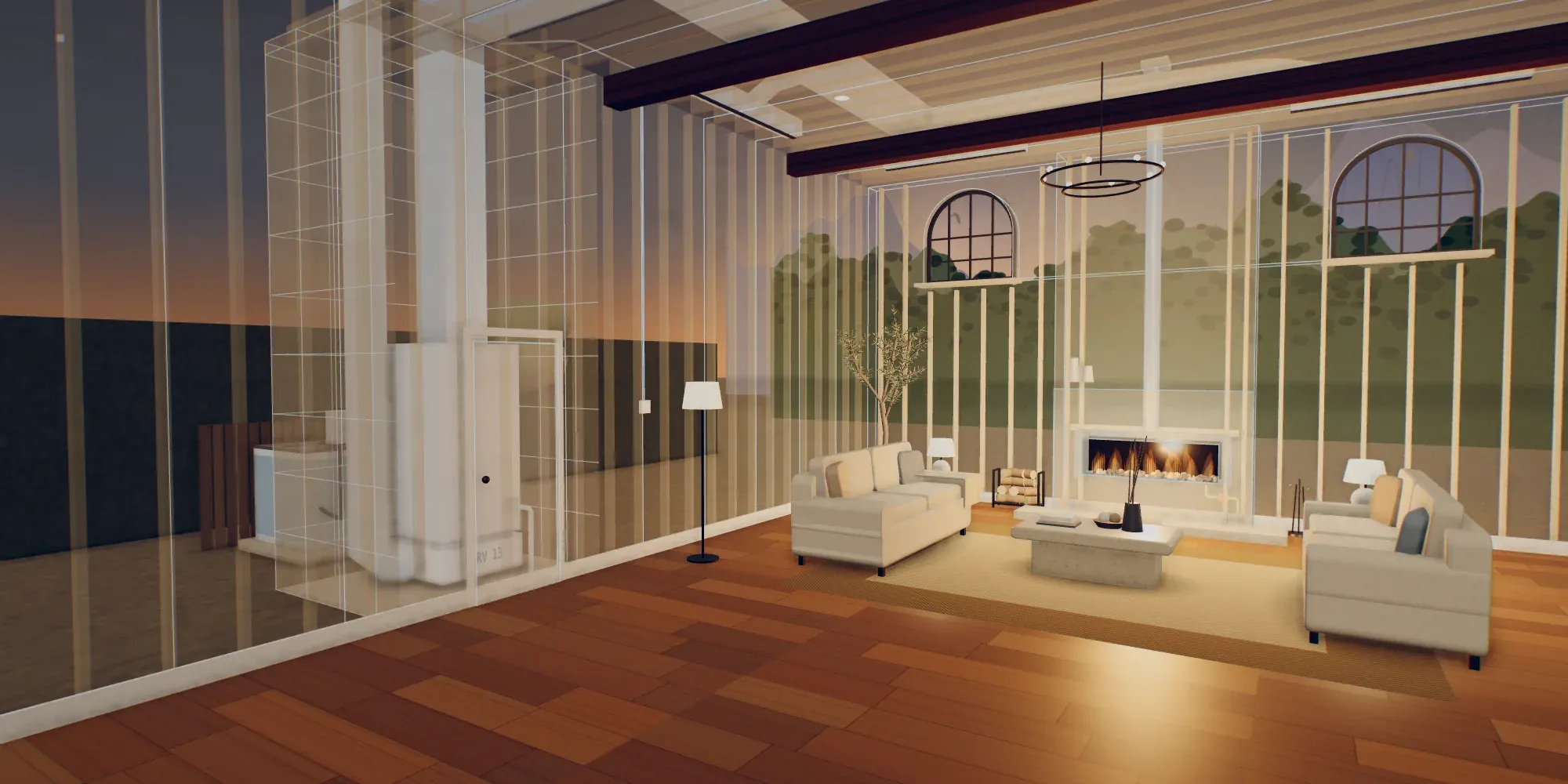
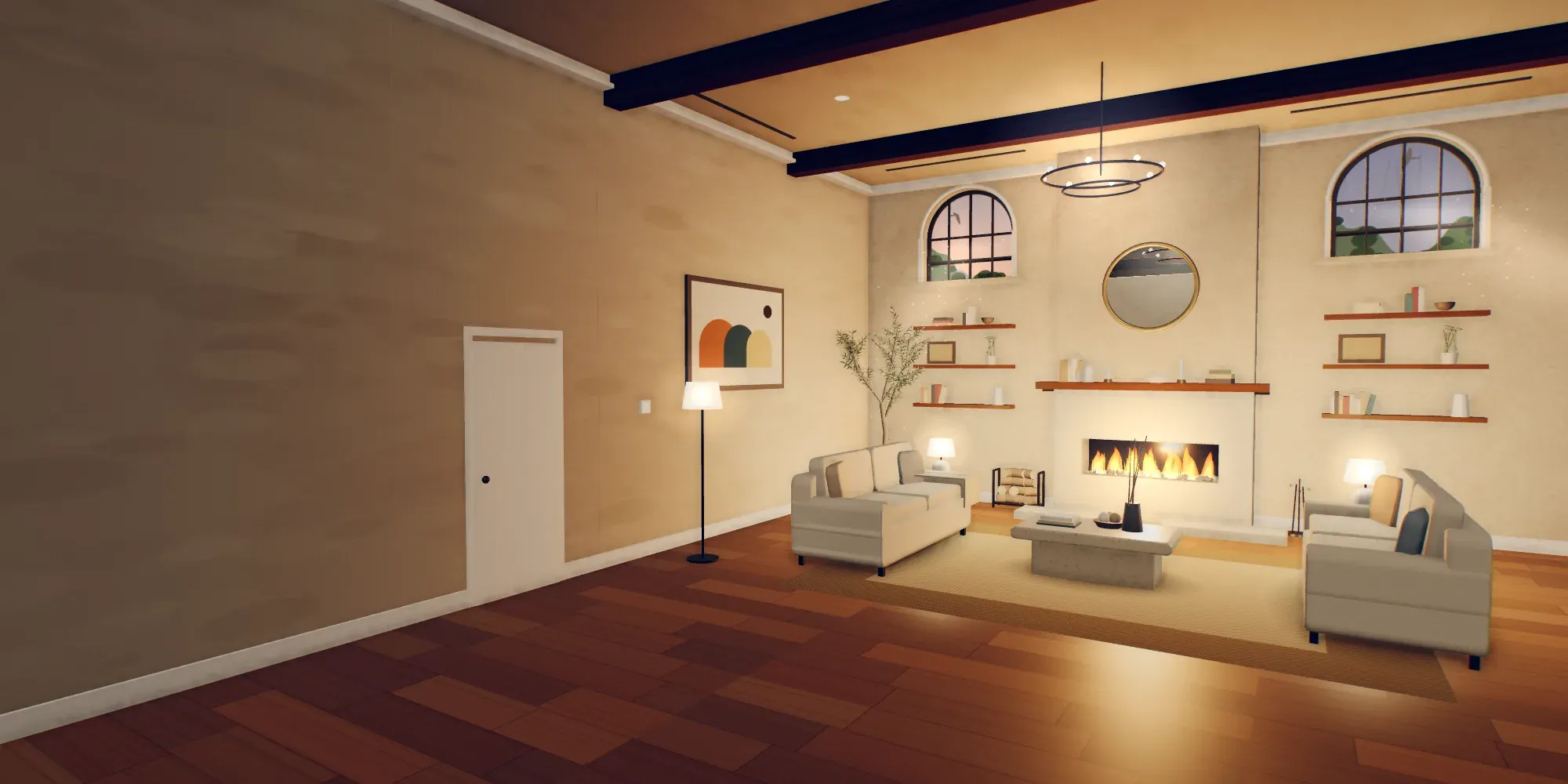 FinishedBehind the walls
That's a drawing. The photos are from our own jobs.
Every line, and what happens without it.
A low number usually means a line is missing. Turn one off to see what you'd be left to pay for. Check any quote against this list, ours included.
Heat pump or furnace replacement
Before I compare quotes, please confirm in writing that yours includes each of these:
Checklist copied. Paste it into an email or text.
The house measured: floor area, windows, insulation, and which way the rooms face. That math gives the size of system your home needs.
If it's left out: A unit sized by matching the old one can be too big or too small. An oversized system switches on and off, wears faster and leaves rooms uneven.
The outdoor unit, the indoor unit or furnace, the coil and the thermostat, each with brand, model number and capacity.
If it's left out: A brand name alone lets a cheaper model be swapped in. Without model numbers you can't check the efficiency rating or the warranty.
What was found in the attic or crawlspace and exactly what will be done to the ducts, in writing.
If it's left out: New equipment on leaky ducts heats and cools the attic. Duct problems are a common reason a room never gets comfortable.
The circuit, the disconnect at the outdoor unit, and a check that your panel has room. This matters most when a heat pump replaces a gas furnace.
If it's left out: A panel problem found halfway through the job becomes a surprise bill and a delay.
The insulated copper lines between the indoor and outdoor units, and a drain with a safety shutoff.
If it's left out: Lines that are reused, kinked or the wrong size shorten the life of the compressor. A drain with no safety switch can overflow into a ceiling.
Where the outdoor unit sits, what it sits on, and how much room it has to breathe.
If it's left out: A unit squeezed against a wall or under a bedroom window runs louder and works harder.
Who pulls the permit and meets the city or county inspector. Ask to see the permit and its cost named on the proposal.
If it's left out: Unpermitted work can surface when you sell the house, and nobody independent has checked the gas, electrical or venting.
California requires a third party tester on most HVAC replacements. The tester is independent of the installer.
If it's left out: The permit can't be closed without it, so it either gets added later or the job stays open on the record.
Refrigerant charge, airflow and temperatures measured and written down before the job is called done.
If it's left out: A system that was never measured can run for years below the efficiency you paid for.
Old equipment hauled away, refrigerant recovered as federal law requires, and floors protected during the work.
If it's left out: Haul away shows up as an extra on the last day.
The manufacturer's warranty on the equipment, the installer's warranty on the work, both in writing, and a walkthrough of the controls and filters.
If it's left out: Many manufacturers give a shorter warranty if the equipment isn't registered soon after install. A labor warranty that isn't written down is hard to rely on.
11 of 11 lines in this quote. Risks handed to you: 0
Gas fireplace installation
Before I compare quotes, please confirm in writing that yours includes each of these:
Checklist copied. Paste it into an email or text.
A look at the room, the wall, the route for the vent, the gas supply, and what sits above and behind the wall.
If it's left out: A price given over the phone is a guess. The vent route and gas supply decide a large part of the job.
Brand, model, heat input, fuel type, and the trim, glass and media you chose.
If it's left out: Without a model number you can't check the installation manual, the clearances or the warranty.
The opening built to the manufacturer's dimensions, with noncombustible material where the manual calls for it.
If it's left out: Clearances to wood framing and finishes are fire safety limits. Mistakes here end up hidden behind the finished wall.
A line sized for this fireplace and the rest of the house, with its own shutoff valve, pressure tested.
If it's left out: An undersized line gives a weak flame. An untested line is a leak nobody has looked for.
Sealed vent pipe to the roof or an outside wall, ending the required distance from windows, doors and corners.
If it's left out: A poorly routed or unsealed vent can send combustion gases back into the house.
Power for the ignition, the fan, the remote or wall switch, placed where it can be serviced.
If it's left out: Power in the wrong spot means opening the finished wall again.
Stone, tile, plaster and the mantel. The proposal should say which of these the installer does and which your builder or designer does.
If it's left out: Finish work is the most common thing a low quote leaves out. Know who is doing it before you sign.
Who pulls the permit and meets the inspector. Ask to see the permit and its cost named on the proposal.
If it's left out: Unpermitted gas work can surface when you sell, and nobody independent has checked it.
A gas leak check, a carbon monoxide test, and the flame adjusted with you in the room.
If it's left out: You find out about a problem on the first cold night instead of on the last day of the job.
How to run it, how to clean the glass, when to have it serviced, and the warranty terms in writing.
If it's left out: No record of who to call or what is covered if something fails.
10 of 10 lines in this quote. Risks handed to you: 0
Every home is different, so not every line applies to every job. Ask us to point to each one on your proposal. Comparing several quotes? Use the quote scorecard.
Why two houses on the same street get different numbers.
None of this is a secret. We go through each one at the free walkthrough, and you can ask why any line is on your proposal.
The size and type of system
A larger home or a higher efficiency, variable speed system costs more to buy. It can cost less to run. Run the numbers.
The state of your ducts
Sound ducts get sealed and reused. Crushed, undersized or very old ducts need more work.
Your electrical panel
A panel with room for a new circuit is simple. A full or outdated panel adds an electrician's work.
Access
An attic you can walk into is quick. A tight crawlspace, a steep roof or a second story takes longer.
The vent and gas route
A fireplace on an outside wall has a short vent. One in the middle of the house needs a longer route through framing. See fireplace installs.
Finish materials
Plaster, tile, stone or steel around a fireplace changes the job more than the fireplace itself.
Your town's permits and review
Fees and design review differ between Goleta, Santa Barbara, Montecito and Carpinteria. Who permits what.
Rebates and tax credits
Incentives change often and can lower what you pay in the end. We point you to the current ones. Check incentives.
What you should be holding at the end.
At the end of a job you should have these papers. Ask any contractor, including us, for these five documents.
A written proposal
The scope, the equipment by model number, the price, and what is not included.
The permit
The permit number when the job needs one, and the sign off once the inspector has been.
Change orders
Any change to the scope or the price, written down and agreed before the extra work.
Test results
Duct test results where testing applies, and the startup readings.
Warranty and manuals
Warranty terms for equipment and labor, model and serial numbers, and the owner's manuals.
What the number buys besides equipment.
Any contractor can buy the same equipment. The difference is in the planning, the install and the crew.
A licensed, certified crew
California contractor license #1086420, NATE certified, CSIA Certified Chimney Sweep credentials, and ongoing manufacturer training.
Both trades planned together
Vents, gas lines, ducts and framing want the same space. One crew planning both avoids rework.
Permits spelled out
When a job needs a permit, your proposal names it and its cost, with the right office for your town. Nothing is assumed.
Your home protected
Drop cloths go down before any tool comes out, and the work area is kept tidy.
A walkthrough at the end
We show you how it works, what to maintain and who to call.
Someone to call afterwards
A local shop on Gutierrez Street and a phone that reaches Jeremy's team directly.
The price is only one of four costs.
A cheaper system can cost more to run and maintain. These free tools let you check with your own rates.
The price
What you pay once, shown as one flat rate number.
The running cost
Gas and electricity, every month you own it.
The upkeep
Filters, tune ups, sweeps and inspections.
The money back
Rebates and tax credits, where they apply.
The rules every contractor has to follow.
These protect you on any home improvement job, whoever you hire. They come from the Contractors State License Board, checked October 2026. The Board has the current rules and the final say.
Sources: CSLB contract guide, License lookup, Energy Commission on testing
A written contract
Home improvement work over $500 in labor and materials must be in a written contract.
A capped down payment
The down payment can't be more than $1,000 or 10 percent of the contract price, whichever is less.
Payments that follow the work
Payments can't run ahead of the work done. The contract should show each payment and what it covers.
Changes in writing
Any change to the contract must be written as a change order before the extra work is done.
Time to change your mind
You have three business days to cancel a home improvement contract, or five if you are 65 or older.
A license you can check
Look up any contractor's license, bond and workers' compensation with the state. Ours is #1086420.
Questions about price.
Anything else, call or text me.
Why don't you list prices for new systems or fireplaces?
Because an honest number depends on your house: the size of system it needs, the state of the ducts, the electrical panel, access, and the route for the vent or gas line. A price list would only set the wrong expectation. We look first, then give you one written flat rate number for your project. The estimate is free.
What does flat rate pricing mean?
You get one price for the written scope of work before we start, instead of a bill that grows by the hour. If you'd like to see how the number breaks down, ask and we'll walk you through it.
Is the estimate really free?
Yes. Installation estimates are free and by appointment. Repairs are different: they start with a diagnostic. A residential HVAC diagnostic is $220, commercial is $250 and a fireplace diagnostic is $220. After-hours diagnostics start at $308.
Can the price change after work starts?
A flat rate proposal covers the scope written on it. If something hidden turns up, such as damage inside a wall, California requires any change to be put in writing as a change order before the extra work is done. Ask us how we handle surprises before you sign.
How much do I pay up front?
California caps the down payment on a home improvement contract at $1,000 or 10 percent of the price, whichever is less, and payments can't run ahead of the work. The terms are in your proposal.
Why is one quote so much lower than another?
Usually because something is missing: the permit, duct testing, a load calculation, electrical work or finish work. Line the quotes up item by item before you compare the totals. The checklist on this page and our quote scorecard both help.
What does a diagnostic include?
A technician comes out, tests the system or the fireplace and finds the cause before anything is replaced. Then you get a clear repair price, or an honest word that replacement makes more sense. Call (805) 699-1112 to book.
Are permits included?
Not automatically. When a job needs a permit, the permit and its cost are listed in your proposal. If it isn't written there, ask.
Call or text Jeremy.
Tell me about the room or the system and we'll set up a free estimate. For a repair, text me a photo of the unit first. It often saves a trip.
(805) 699-1112jnjfireplacepros@gmail.comOpen email app- Address
- 511 E Gutierrez St, Santa Barbara, CA 93103
- Hours
- Call or text to schedule. After-hours appointments when a technician is available.
- Estimates
- Free, with flat rate pricing
- Serving
- Santa Barbara County: Santa Barbara, Goleta, Hope Ranch, Montecito, Summerland, Carpinteria, Santa Ynez, Solvang and Buellton
- License
- CSLB Lic. #1086420 (C-20), active. Workers' comp insurance on file with the CSLB.