How it works
A heat pump moves heat instead of making it. In summer it carries heat out of the house, like any air conditioner. In winter it reverses and carries heat in from the outside air. Because it moves heat rather than burning fuel, it typically delivers more heat energy than the electricity it uses.
- Indoor unit, in a closet or attic
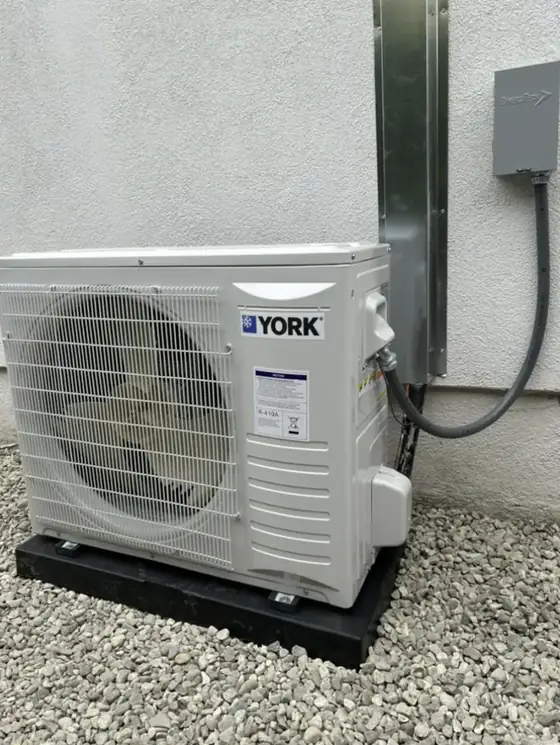
- Outdoor unit
- Refrigerant lines carry the heat
- Summer: heat is carried out of the house, like any air conditioner
- Indoor unit, in a closet or attic
- Outdoor unit
- Refrigerant lines carry the heat
- Winter: it reverses and carries heat in from the outside air
Why it suits the coast
Winters here are mild, so a heat pump rarely has to work hard, and most homes need both heating and cooling. One system for both is simpler than a furnace plus an air conditioner. Smoke season also makes filtration part of the plan, and a good installation allows for it.
Ducted or ductless
- Ducted systems use an air handler in a closet or attic and hidden ducts with slot diffusers. They suit whole house comfort and the cleanest look.
- Ductless mini splits use a slim indoor unit in each room or zone. They suit additions, studios, guest houses and older homes with no ducts.
- Many homes use a mix: ducted for the main house and ductless for the outliers.
What a good installation includes
- A load calculation instead of a guess based on the old unit's size.
- A look at your ducts, because leaky or undersized ducts waste most of what the new system saves. California requires independent testing of ducts on most system replacements.
- A check of your electrical panel and the route for power and the refrigerant line.
- A short line set and an outdoor unit placed and screened away from bedrooms, terraces and the neighbors. Coastal homes should ask about corrosion protection.
- Permit, inspection and a walkthrough when the work is done.
Incentives
Utility, state and regional programs for heat pumps open and close through the year, and the federal home improvement tax credit for heat pumps ended for equipment placed in service after December 31, 2025, unless Congress brings it back. See the incentives page for where to look and what to ask us.
Planning to replace a furnace and air conditioner?
A free estimate includes a look at your ducts, panel and equipment locations, so you know what's involved before you decide.